.

Rainbow


JAW Staff

Nann Dunne
Editor-in-Chief
and Publisher
v
Lori L. Lake
Associate Editor and
Manager of Lesbian Fiction Herstory Page
v
Erin O'Reilly
Associate Web Master
v
Lynne Pierce
Featured Author Liaison
v
Trish Shields
Manager of Lesbian Poet Herstory Page
v
Contributing Columnists
Anna Furtado
Fay Jacobs
Lori L. Lake
Lee Lynch
Andi Marquette
Carsen Taite
v
Contributing Reviewers
in This Issue
Anna Furtado
Lynne Pierce
RLynne
v
Publicity
Cheri Crystal


Click on
bulleted items to
navigate sections:
 

JAW Contents

· Hone Your
Writing Craft

Writing Suspense:
Techniques, Pacing, and
Things To Avoid

by Lori L. Lake

· Fay's Beach Buzz
Oddly Hungry for More
by Lee Lynch
(Standing in for
Fay Jacobs)

· Featured Authors
Mavis Applewater
Lori L. Lake
Bev Prescott

· Amazon Trail
Crying for Barbara Grier
by Lee Lynch

· Reviews
Balance of Forces -
Toujours Ici
by Ali Vali
§§§
Before I Died
by Sara Marx
§§§
For Me and My Gal
by Robbi McCoy
§§§
Love Another Day
by Regina Hanel
§§§
Seeking Sarah Summers
by Susan Gabriel
§§§
Stealing Angel
by Terry Wolverton
§§§
Taken by Surprise
by Kenna White
§§§
The Girls Club
by Sally Bellerose
§§§
The Secret of
Lighthouse Pointe
by Patti G. Henderson
§§§
Two for the Show
by Chris Paynter
§§§
Verge
by Z Egloff

· Poetic Measures
Merry Christmas
To Whomever
It May Concern

by SITN

§§§
I'll Always See Your Face
by Nann Dunne

§§§
Arm in Arm
by Nann Dunne

§§§
Adieu...Merci
by Sage

· Carsen Taite's Vlog
Not Dunne Yet


· New Book Releases
Buyer's Remorse
by Lori L. Lake

§§§
Callie's Dilemma
by Vicki Stevenson

§§§
Decoded
by Sara Marx

§§§
High Impact
by Kim Baldwin

§§§
Homestead
by Sheila Ortiz-Taylor

§§§
Leave No Footprints
by J.D. Shaw

§§§
Ninth Life
by Lauren Wright Douglas

§§§
Out of Step
by J. Lee Watton

§§§
Rainbow Inn
by J. Summers

§§§
Rescue Me
by Julie Cannon

§§§
Snowbound
by Cari Hunter

§§§
The Truck Comes
on Thursday

by Sue Hardesty

§§§
Two on the Aisle
by Robbi McCoy


· Announcements
This Is the Last Issue
of Just About Write
§§§
2012 GCLS Convention
Set for Minneapolis
§§§
Two Calls for Submissions


JAW Is Created and
Published by:

Nann Dunne

Hear Nann read
excerpts at
www.nanndunne.com

From her books:
The War Between
the Hearts

on sale at
Bella Books

And the sequel:
The Clash Between
the Minds

on sale at
Bella Books

Staying in the Game
on sale at
Bella Books

Co-author of:
True Colours
(Book 1)
on sale at
Bella Books


Many Roads to Travel (True Colours, Book 2)
on sale at
Bella Books

· Contact

· Subscribe 

· Unsubscribe


The Clash Between
The Minds

by Nann Dunne

_____


The Heart's Longing
by Anna Furtado

_____


Shimmer
Shimmer
by Lori L. Lake

_____


The War Between
The Hearts

by Nann Dunne

_____


Snow Moon Rising
Snow Moon Rising
by Lori L. Lake

_____


The Heart's Strength
by Anna Furtado

_____


True Colours
True Colours
by Karen Surtees
and Nann Dunne

_____


Many Roads to Travel
by Karen Surtees
and Nann Dunne

_____


Romance For LIFE
Romance For LIFE
Editors: Lori L. Lake
and Tara Young

_____


Ricochet in Time
Ricochet in Time
by Lori L. Lake

_____


The Heart's Desire
The Heart's Desire
by Anna Furtado

_____


Have Gun We'll Travel
by Lori L. Lake


_____


The Milk of Human Kindness: Lesbian Authors Write about Mothers and Daughters
  
Edited by Lori L. Lake

_____


Stepping Out
by Lori L. Lake

_____


Different Dress
Different Dress
by Lori L. Lake


Book Distributors
(Some publishers sell their books onsite.)

Click graphic to access.


Bella

Moon


Publishers

Alyson

Bedazzled

Bella

Blue

Bold

Bywater

Clover

Intaglio Publications

L-Book.com


The Athenaeum
Source of Beta Readers

_____

Discover Buzz
Click cover for
free copy of
Discover Buzz
_____


Live a Life
That Matters

Take a breath from
your busy life
and visit this site.
     Article Archives         Review Archives          Resource Links    
Issue 90
December 2011

Welcome...  
woman at computer
Bye-Bye!


A Proud Member of
The Golden Crown
Literary Society


Format: Near a subhead at the beginning of each article, you'll see a plus sign (+) or a minus sign (-). Click on the "+" to expand the article, and click on the "-" to contract it. This should work on most computers, but if it doesn't work on yours, you'll see the full article in place.


This ezine presents articles and article archives on writing, editing, and promotion as well as submissions of poetry that may be of interest to all writers and readers. Other articles and promotional areas such as bios, reviews, new releases, and announcements from and about publishers relate exclusively to lesbian authors and their readers. We hope you enjoy your visit.


Finish Your Manuscript!

Dunne With Editing cover


Dunne With Editing: A Last Look at Your Manuscript, gives concise explanations, clear examples, and useful tips to make your manuscript as perfect as possible.

This helpful book is available in print and ebook formats and can be ordered at www.nanndunnebooks.com as well as at Amazon.

Take a look. Add it to your library must-haves, and polish your writing until it shines.


This Is the Last Issue of Just About Write.
See Announcements Section Below for Full Details.


Hone Your Writing Craft


Writing Suspense:
Techniques, Pacing, and
Things To Avoid

© 2011 Lori L. Lake


Suspense isn't just for thrillers, horror, or ghost stories. It's a key element of *all* fiction and one that no writer can afford to overlook. In every novel or story, the writer's aim is to cause the reader to continuously ask what will happen next. Will the protagonist find out a crucial fact in time? Will he get out of the situation in one piece (alive, with the Holy Grail, etc.)? How can she succeed, given the obstacles in her way? Will she solve the mystery and shut down the killer? Will they find true love? Will he reconcile with his family, or will his brother really kill him as he said he would when last they met? The art of suspense is to constantly give your reader something new to worry about.

In order for suspense to happen, your protagonist has to have something critical - a desire or a need - on the line. In Jane Austen's time, a girl who couldn't get a good provider to marry her was left to the whims of her father or brothers. Without a man's income, women in Victorian times led lives fraught with suspense. In most of Austen's novels, getting married to someone who's not too odious in order to be financially secure is a significant part of the plot, and this can be compelling and tense. Even a quiet little drawing room comedy can be as suspenseful as the latest blockbuster movie thriller.

The Roller Coaster of Suspense

The first key to suspense is that the protagonist must have a significant stake in the situation, in other words, one or more reasons to be intent on achieving certain goals. The tension, excitement, worries, and fear - or a sense of impending tragedy - arise at the prospect of the hero or heroine failing in their quest. You must make the stakes clear to the reader. What does your protagonist stand to lose if she fails in her quest? She must have a powerful motivation, strong needs and wants. Human needs are not simple, but most stories have common goals: love, desire for justice, ambition and success, greed, protection of one's family, and survival are some typical examples. What's at stake must actually matter, or readers won't believe the character will persist in the quest.

Books lacking suspense don't capture readers' imagination. Suspense is what keeps the reader paging ahead to read the next paragraph, next scene, next chapter. Successful suspense in a story or novel doesn't have to include spectacular car crashes, psychopathic stalkers, or haunted houses. It can be found in the most mundane of lives. Nobody's life has to even be threatened.

Suspense falls into two major categories:

Big-Time Suspense - The protagonist battles a villainous enemy, aliens, terrorists, etc., and the safety of a town, region, country, even the world, depends on success.

Small-Time (but no less effective) Suspense - Protagonists battle something more personal that affects them or their small circle: fear of commitment, a wicked stepfather, bullies at school, an encroaching storm, alcoholism, etc.

What Suspense Is Dependent Upon

Suspense is dependent upon story people that the reader believes in, and we believe in characters when the things they do - however subtle or desperate - make sense. How do the actions or events bring about anxiety, worries, frustration, and fear? How does your protagonist react to that? Not everyone reacts the same way, so responses are varied and interesting. But no matter how much variation exists, the actions taken need to make sense in the context of the story.

How your characters act and react to their situation forms the plot. What do they do next? What will happen then? What will happen after that? Suspense arises from that cycle - it's a feedback loop. Plot, therefore, is the receptacle for suspense.

Techniques a Writer Can Use to Up the Suspense Quotient

Start Simple and Stay on Track - Start out by determining what the characters have at stake, and stick with that. If stakes do happen to change, they need to make sense, so be sure to stay on track and focus on believability.

Convoluted plots wreak havoc on believability: "Sally discovers her girlfriend is an android who can impregnate others through sexual touch plus a certain chemical which they've both just ingested during a meal, but the android - who Sally desperately loved - has been accidentally and temporarily disabled by contact with a kryptonite-like substance that loses power outside of direct sunlight, and a solar eclipse is about to begin." LOL!

It's not enough to come up with a complicated plot line; it has to make sense. It's also not enough to put your character in constant danger. Risk is important, but melodrama isn't useful.

Build Momentum Gradually - Don't try to do it all at once. Excitement is supposed to grow, increasing gradually, not hit us upside the head like a 2x4. You can take the time to build your suspense. When writers try to force suspense, the usual result is laughable melodrama.

Use Dramatic Irony by Having the Reader Know More than Your Character Does - Dramatic irony occurs when the words and actions of the characters in a work of literature, drama, film, etc., have a different meaning for the reader than they do for the characters involved. Readers have perspective that a character in trouble doesn't have. So the author manages to give the reader greater knowledge than the characters themselves are allowed to possess. Maybe from other scenes, the readers already know about the vampires and monsters emerging from the depths of the evil Hellmouth, but the protagonist has no clue what she's walking into. The TV show Buffy The Vampire Slayer used this tactic to great effect. Buffy or her friends might be patrolling the graveyard and have no idea that some freak was going to jump out and attack them. But we viewers already knew it, and the suspense came from wondering when the creature was going to jump the good guys.

Judiciously Utilize Delay - You can structure your book in such a way that many things are happening in various locales, and as you shift from one scene to another, you leave key characters in peril. However, Polly Purebred doesn't need to be left tied to the railroad tracks for this to be effective. The cliffhanger can be as simple as a scene's main character not knowing what to do next or deciding to do something that the reader knows can be risky. The writer can delay the telling of her actions until another scene or chapter has passed.

Use Character Fear, Terror, Dread - Introduce the protagonist's worst fears and then confront her with them. Is security critical? Have her lose her job or have her apartment lease revoked and nowhere for her to go. Or maybe there's a fire, all her cash burns up, and she's left penniless with a loan shark on her tail.

Torture her with her worst nightmare, which is something you must introduce early on so the reader knows her fears in advance. Indiana Jones and his fear of snakes is a good example. When he ends up in the Well of Souls, which is crawling with snakes, that certainly ups the suspense ante because we already know how scary snakes are to him. Will he freeze? Freak out? Die?

Prolong Difficult Situations - Just when it seems that the character is going to get out of a mess, dump something new on her. Solving one problem just leads to another. And another. And then it gets worse. "Terrible Troubles" lead to suspense, with heavy emphasis on the plural of "troubles."

Put Your Characters on a Deadline - You need not have a ticking bomb. The issues can be as simple as Cinderella needing to get to the ball to meet the prince, but in order to do so, she simply must have adequate clothing. She gets the dress and shoes, but she will return to her former bedraggled state at midnight, so she has a lot of work to do between now and then. Unfortunately, she doesn't tell the prince who she is before midnight and all is lost. But wait! She left behind a glass slipper, and the prince is scouring the land, having all the young girls try it on. But when he comes to Cinderella's home, her stepmother has locked her away, and if she doesn't get free before he leaves, all is lost...

Or perhaps the character must get to the subway on time because if he doesn't, he'll miss the critical job interview, and his whole life depends on getting a job now. Then he misses the subway. Not only that, he ends up on the tracks in the dirt, has to crawl out, and his suit is ruined. Now he has even less time to get a taxi, and where will he get a clean suit?

Use Language to Slow Down - Describe many details using compelling nouns and verbs that evoke all the senses. Spotlight key details enough that when it comes time for the protagonist to deal with that thing or process, the reader is fully aware it's going to be a problem that creates tension. Movie director Alfred Hitchcock always used to say that suspense is heightened when the viewer knows something is going to happen, but not when or how. So let's say your character is meandering through a graveyard at night, and the reader already knows that once per month for the last sixteen months, bodies have been found there with all the blood sucked out of them. The suspense quotient increases the longer that the reader has to wait for something to happen, and your reader will be on edge, waiting, wondering, scared for the character. Will a vampire jump out? Will the death be painful? The longer the character wanders around, the more nervous the reader gets. If you've read anything in the Gothic mode - or HP Lovecraft's horror stories - you know how effective this can be.

Use Language to Speed Up - Write action scenes using terse, concise terms and choppy sentences interspersed with longer descriptions that provide balance and pacing. One action leads to the next complication and further doubt that the character will achieve goals. Action/mystery author Lee Child is a master at this. Here is a snippet from Persuader, his seventh Jack Reacher thriller:
"I flipped the tail of my coat and pulled out the Colt. Aimed very carefully and fired once at the Toyota 's grille. The big gun flashed and roared and kicked in my hand. The huge.44 slug shattered the radiator. I fired again at the left front tire. Blew it out in a spectacular explosion of black rubber debris. Yards of blown tread whipped through the air. The truck slewed and stopped with the driver's side facing me. Ten yards away. I ducked behind the back of my van and slammed the rear doors and came out on the sidewalk and fired again at the left rear tire. Same result. Rubber everywhere. The truck crashed down on its left-side rims at a steep angle."
The combination of sentence fragments interspersed with longer and shorter sentences moves the action along effectively and helps to maintain a suspenseful pace.

Filter Emotion and Reactions through your Character - This is one of the easiest ways to engender suspense. Descriptions of your character's fears and bodily reactions are some of the best techniques you can use. How do you feel when something scary happens? What happens to your stomach? Your skin? Your breathing? Use those experiences to describe your character's reactions. Daphne du Maurier did an amazing job of this in her moody and affecting novel Rebecca. We consistently feel we are right with the second Mrs. de Winter as she tells the tale of her life at Manderley. Even after more than seven decades, that novel carries enormous power and suspense and is well worth reading and analyzing for technique ideas.

Use Mood in Language and Place to Evoke Suspense - You can establish mood by the language you use, but it requires you to think deeply about the words you choose, particularly nouns and verbs. An "ominous overhang of branches" - not "a scary-looking tree." A "heavy metal box encrusted with rust and stinking of a harlot's perfume" - not "a rusty old box that smelled sweet."

You can also set scenes in places that automatically raise hackles: graveyards, hospital ERs, deserted freeway underpasses, at night in the woods, on a storm-tossed sea, etc. Or do the reverse: employ a usually safe place like an amusement park, carnival, birthday party, a camping trip, etc., and make it frightening, as Stephen King does so well.

Use Foreshadowing - Foreshadowing is the presentation - of details, characters, or incidents in the novel or story - that prepares the reader for (or "shadows forth") later action, events, or scenes.

An example of this occurs early in The Wizard of Oz, when the local crank, Miss Gulch (who is trying to take away Dorothy Gale's dog), transforms from a dry, sour-looking spinster into a shrieking witch on a broomstick as the house is spinning in the twister. This foreshadows her reappearance as the evil Wicked Witch of the West, who is Dorothy's nemesis in Oz. The witches in the opening scene of Shakespeare's Macbeth also foreshadow the evil events:
"Double, double, toil and trouble;
Fire burn, and cauldron bubble."
It's usually not quite enough to merely drop hints. Though you have to be somewhat subtle, you can't be so obscure that the foreshadowing doesn't register with the reader. Foreshadowing only works if the reader has sufficient information to connect the dots at the later point. You can't dump things on the reader out of thin air. Seed in the issues early on, and avoid this kind of problem:
"Sally pulled the gun out from under the car seat as she drove ninety miles an hour. She'd stopped after lunch to pick it up, and now with the assassin chasing her, was she ever glad she'd thought to do that."
Too bad the author didn't think to have us go with Sally to pick up the gun because at this great late date, we don't believe this at all. We've been WITH HER all day long as she dealt with all her Terrible Troubles, and we know for double-damn sure that she never stopped to pick up any gun. How simple it would have been to add a brief scene - even just a few lines of exposition - ahead of time to convince us that this really happened and set us up for the suspenseful chase-and-shoot scene.

Make Sure the Climax Lives Up to the Suspense - Plan ahead for the best ending for your story. What will surprise, shock, and/or shake the reader? Is it realistic? If you can't plan ahead, then be ready to go back and revise to make sure the reader is surprised, shocked, and shaken. Most of the time you will have to go back through your manuscript and beef up the suspense. Be ready and willing to do that.

Read Successful Suspense - Take notes on how they did it, and then apply the techniques to your own work. Some of the best writers of suspense aren't necessarily creating thrillers. Kathryn Stockett's The Help maintains a great deal of suspense. Shadow Divers, Robert Kurson's true story of deep-sea discovery and adventure, is well worth analyzing. Suzanne Collins' YA trilogy that begins with The Hunger Games is a marvelous example that kept me on the edge of my seat.

When you're reading and find yourself holding your breath, rushing ahead to see what happens next, make sure you go back and determine what the author did to cause that effect.

Things to Avoid

Using Contrived Suspense
Characters need reasonable motivations and REAL REASONS for acting the way they do. Don't bore the reader with random obstacles that don't naturally arise from your plot or from characters' reactions. The stakes have to be fairly high level for the reader to believe in the predicaments your characters get themselves into. Make sure that you've set up situations where the suspense is warranted.

Creating False Suspense (Related to Contrived Suspense)
Movies can make you jump with music swelling and strange noises - that then turn out to be a stray dog in the yard, a car backfiring, or the local bum sorting through the outdoor garbage for bottles and cans. Your work in a book is more difficult because you can't rely on audio or visual to support the suspense. All you have is Words. While it's possible to have your character startled a few times, then lulled into complacency when it's a false alarm, you have to be careful not to overuse that technique.

Furthermore, cliffhangers are all well and good - but only if they're REALLY cliffhangers that make sense in the context of the story. Don't leave the reader hanging, anxious to turn the page to the next chapter only to learn repeatedly that the tension-causing event was a false alarm. Too many letdowns like that cause a reader to want to throw the book away.

Making Things Too Easy
There's little suspense if nothing goes wrong...then goes "wronger and wronger." Your character shouldn't have an easy time solving her problems or finding information. She should be lied to, misdirected, blocked repeatedly, deceived, and confused. Austen's Elizabeth Bennett (in Pride and Prejudice) shouldn't attract Mr. Darcy and get a proposal right off the bat. If what the protagonist desires comes too easily, the storyline will slump into a coma.

Failing to Let Real Life Be a Part
The contrast between Real Life and the sudden mess the protagonist gets into is important. Don't leave out real-life details that make the suspense feel damaging and difficult. In fact, contrasting how comfy and happy a character WAS is an excellent way to up the ante when she's suddenly confronted by thugs who want the money she borrowed that got burned up in her house fire. Now she's on the run, no steel-enforced door to hide behind, no phone at hand to call for help, and not even a proper pair of shoes to run in.

Using Gimmicks
As the Bible says, there's nothing new under the sun, but for writers, old ideas, old plots, and old character types can be updated effectively with a little imagination and cleverness. For instance, using historical figures as sleuths has been tried successfully by many authors. Laurie R. King writes the Mary Russell/Sherlock Holmes series and she does it well. Obviously she knows the Holmes oeuvre backwards and forwards. Seth Grahame-Smith did a Jane Austen and the Zombies book, but now everyone's decided to copy that. How many people did a wretched job copying the scope and suspense of The Da Vinci Code? Do your homework. Double-check the accuracy of your research, but also make sure that you're not using a gimmick that WAS a good idea, but has now been done to death. (Need I mention Vampires?)

Overemphasizing Violence
Violence does not equal suspense and can, in fact, detract from tension and suspense. The THREAT of violence is a lot scarier and more suspenseful than the shock value of actual physical violence.

Overusing violence leads to reader fatigue (not to mention a loss of suspense and a possible gross-out factor). One graphic scene after another soon becomes tiresome and loses impact. Select your violent encounters very cautiously. Sometimes a description afterwards by the affected party of what happened is more powerful than a blow-by-blow description of every bit of torture or rape as it occurs. Or it may be better to give a small taste of the violence to come and leave the rest to the reader's imagination. In the TV show 24, terrorists set off a "small" but very destructive dirty bomb that killed twenty thousand people just to show what they could and would do. Then they communicated how the "big" bomb they possessed could do a zillion times more damage. The fear factor and suspense goes way up!

Failing to Play Fair
In the crime fiction realm, if you're writing a mystery/suspense story, "playing fair" means that you provide key information and clues in such a way that the reader isn't left out of the loop. The reader wants a fair chance at figuring things out just like the detective is trying to do. You will affect - and possibly wreck - your suspense levels for your reader if you don't "play fair."

Hiding the Evil One/Villain
If a reader gets near the end and hasn't got a clue who the suspects are, and then someone who wasn't even in the story up until then ends up being the villain or Evil One, the reader will feel cheated. Yes, you should plant clues that misdirect to other suspects, but you must also plant clues that point to the actual villain/antagonist. This goes for crime fiction, of course, but also for any kind of novel. The reader needs hints about who the antagonist is, whether it's a person, a situation, or something inside the protagonist that he or she is fighting. Without a proper balance in this area, you can completely lose all semblance of suspense and create a story that readers will laugh at instead of be thrilled by.

Overdoing The Villain
There's a difference between an over-the-top villain - and a villainous antagonist. Villains may be somewhat flat and bad all the way through; antagonists actually need to be well-rounded characters. Doc Ock in the second Spiderman movie was a stupid villain. I had no use for him. He was so over-the-top - for no real reason other than insanity that wasn't believable - that I found the climactic scenes powerfully ridiculous. On the other hand, Hannibal Lector, in Silence of the Lambs, was scarily effective as a villainous antagonist because he was coolly rational - and then freakishly crazy. When we first see him restrained in that creepy mask, minor characters inform us of his wretched deeds, and he seems like a monster. Yet he can also be reasonable - even kind. In the book, he actually left money to the keeper who treated him well, and he committed a hideous murder upon the one who did not. This dichotomy in his behavior gives rise to a real sense of dread and suspense, especially when coupled with Lector's clever dialogue and twisty questions of the FBI agent, Clarisse Starling. If he needed to escape, he thought nothing of killing. His methods and whom he chose to kill were never a foregone conclusion, so the suspense level was high.

Having a Cardboard Protagonist
Like the villain, the hero of the story needs to contribute to the suspense and must be well-rounded. Sometimes that happens because the reader realizes something about the hero that she herself does not. Then we can observe as the character finds strength from within and rises to the occasion in ways that she might never have expected.

Since suspense rises out of the internal issues the hero has, you have to find ways to show what those issues are. Most of the time, the use of senses and internal/interior thought help considerably toward making sure your protagonist isn't a stereotype. Much of the suspense is going to be filtered THROUGH the character, so his or her journey has to occur in such a way that the reader develops sympathy and understanding. If you just show the protagonist from the outside as s/he flees, bargains, puzzles, worries, argues, fights, etc., it can be the opposite of suspenseful, i.e., downright boring.

Relying on the Deus ex Machina
One of the contrivances of some of the Greek stage tragedies included a special riser that brought a god up from a trap door or a crane used to lower actors playing gods onto the stage. In Latin, the term translates to "God from the Machine" - meaning that a machine (riser or crane) serves as a fakey, artificial device to solve the problems of the poor hapless characters who cannot salvage the storyline without help from the gods.

So when a writer relies on Deus ex Machina, it means she's gotten lazy or careless and is about to lose all semblance of suspense and believability. If you've put your character into a hopeless situation that there is no way out of, then you've screwed up. Last-minute rescues, angels coming from above, magic, random passersby, etc., confound believability. If there's going to be a rescue, it better be because the character thought to leave a note or managed to open a cell phone line or SOMETHING. I read a cozy mystery a couple of years ago where the female sleuth figured out who the murderer was, confronted him, and was then subdued and tied up. What a pickle! Unlike the predicament that Mary Shannon, from the wonderful TV show, In Plain Sight, got herself in, the book's character didn't work and struggle and puzzle and agonize over getting away. Her boyfriend and the neighbor break in and save her. How wretched! Not only did the character lose all of my respect, but I never went on to read any more books in that series.

Your protagonists have to solve their own problems - not rely on some outside source to drop in from above and save their butt. Nobody respects a main character who has to be helped all the time because he or she is too stupid or incompetent to function in even the most simple hero role.

Failing to Do Your Research
You can't evoke suspense if you can't knowledgeably write about something. We've all seen the character go into the meatpacking plant in various TV shows and movies - but what is the plant really like? Do they actually hang sides of beef from hooks, and could a person get that heavy chunk of meat down and retrieve the hook to use as a weapon? If not, then don't have your murderer manage to do that. Some readers will know what can and can't be done, and you'll knock them right out of both the suspense and the story if you get it wrong.

Denying the Readers the Payoff(s) They Deserve
If you're going to put the character (and hence, the reader) through hell, there has to be a payoff at the end. The original ending of the movie Fatal Attraction had Alex Forrest (Glenn Close's character) committing suicide and framing Dan Gallagher (Michael Douglas's character) for her death. Test audiences hated that ending. Alex was evil, and the movie creators were told repeatedly that she needed to be punished. They re-shot the ending so that Dan's wife, Beth, avenges them by shooting Alex when she attacks Dan, and presto magic! One of the most memorable drama/suspense movies of the late 1980s is still being introduced to new audiences today and making piles of money.

So you don't have to have a "happy" ending to contribute to your suspense levels - just a sense of justice done or of completion to the arcs and journeys of your characters.

Pacing Killers

Lastly, we ought to discuss pacing. Ineffective pacing kills suspense, no matter how hard you try to make sure that all of the criteria above are taken into consideration. This is why suspense is such a tricky matter. Here are some issues to consider as you work to create a balance in pace and suspense:
• Excessive detail is a killer. But not giving enough detail will fail to provide the reader with the proper grounding to experience the scene. Wherever you can, use shortcuts that evoke detail in the reader's mind. Rather than going into long descriptions, be brief when writing about stuff we all know. Try using clear titles of things: not "trees" - try "redwood forest." Not "vicious dog" - try "Rottweiler with fangs." Avoid describing stuff we all have seen a million times. It's enough to simply name the thing, evoke the image and call it good.

• Info Dumps kill pacing. Whether it's a full stop to describe the surroundings right in the middle of an action scene or characters blathering on in the "As You Know, Bob" style, info dumps slow pacing to a crawl.

• Repetition is another pacing killer. The character worries something will happen. The thing happens. The cops show up and the character describes it all in vivid detail. He then goes home, and his wife asks what happened and he tells it again. And again to the kids. Arrrrrgh! This is one of the key places where brief expository narration is your friend. Once the readers know - and have experienced in a scene - what's happened, don't make them go through it again and again. The readers were there the first time.

• Passage of Time Problems mess things up. Not giving enough time for things to happen can be jarring. This is particularly problematic in food preparation, meals, traveling, doing laundry, etc. Those sorts of things are mundane and boring to begin with, but if, for some reason, you must include those details, make sure the sense of time passing FEELS accurate. I always notice when two people in a novel sit down in a restaurant, say three lines to one another, and then get up, having eaten an entire five course meal. What? That's quite simply irritating, not to mention impossible. There is no reason why the author can't include a simple line that reads like this: "Thirty minutes later, they finished their desserts. Feeling hurried, Sally rose, paid the bill, and they were on their way."
Final Resources
Evoking effective suspense is tricky, but it's a necessary skill for all writers to learn. Without some level of suspense, no book will resonate in the reader's mind, so this is a very important element for writers to focus on.

Oddly though, there are few general reference books about writing suspense. If you're writing in the romantic suspense genre, any How-To book about romance writing usually contains a section. Screenplay writers can find help in Linda J. Cowgill's The Art of Plotting: Add Emotion, Suspense, and Depth to your Screenplay. If you're writing crime fiction, you can find sections on the topic in the How-To books of Carolyn Wheat, Hallie Ephron, and James N. Frey. But only William Noble's Conflict, Action & Suspense tackles the topic head-on and gives significant attention to suspense. I do recommend that book, particularly for those who are just beginning to understand how important suspense really is.
_____
© 2011 Lori L. Lake
From her untitled book about writing, a work in progress.
Not for distribution or copying without the express permission of the author.
Lori can be reached at Lori@LoriLLake.com and welcomes questions and comments.

Back to Top                        


Fay's Beach Buzz             


Unfortunately, Fay's schedule didn't allow her to submit a column this month, but she does have a short note that I culled from her A&M Books latest announcement. Immediately below it, I've put an extra article from Lee Lynch that I thought merited publishing, so I decided to put it in Fay's spot. I'm sure Fay won't mind when she sees the article honors one of our best-loved authors.


From The A&M Books Trumpet
(say it fast and it's A&Mbook Strumpet, which is perfect 'cause we publishers & authors have to prostitute ourselves with endless, shameless promotion…)

Well, Thanksgiving is over, and we are amid the Happy Holidays/Merry Christmas debate, and the full throes of holiday shopping mall insanity.

This year the A&M Books theme is OCCUPY SMALL PUBLISHING COMPANIES. Head to the bookstore or pitch your tent by your computer and make a fuss by buying books for gifts.

We will not use pepper spray. Save a brain, buy a book for somebody!

Happy Holiday Season from A&M Publishers. Come visit us at www.aandmbooks.com.

Rainbow Separator Bar

Oddly Hungry for More

© 2011 Lee Lynch

A woman who has devoted her life to writing our stories, Karen Kallmaker has inspired waves of writers while gathering, like a femme pied piper, whole throngs of readers who await each of her books with anticipation of ever more delight. This year, author Karen Kallmaker was honored with the 2011 Golden Crown Literary Society's (GCLS) Trailblazer Award. She is as beloved as her books.

This is a woman who, as a child, wanted to be Mary Poppins. Later, her super hero was Batgirl. She discovered, very young, that she couldn't fly, and broke her arm trying. She still takes this approach to life and jumps into challenges. This style is clearly genetic, as she is a descendent of Lady Godiva. Fortunately for us, Batgirl grew up and discovered lesbian fiction in a library catalog after seeing the film Desert Hearts in 1986. She has not turned back since.

She was born in Sacramento, California in 1960. She earned a bachelor's degree in Business Administration, has worked in non-profit financial management and the vagaries of California law have led her to thrice marry her lucky partner of over three decades. They have two children.

Writing Is Who She Is

Karin Kallmaker is a serious writer. Writing is who she is. She's acutely aware that she writes not for a publisher, not for a royalty check, not for celebrity, but for her readers. Early on, Kallmaker made lesbian lives more bearable; she continues to enhance our lives by depicting us as we are. It's not that her characters don't have issues, but that lesbians deserve happy endings.

Says friend M.J. Lowe, "Karin is honestly one of the most gracious and kind women I know. All things being equal, she genuinely does the nicer, more generous thing rather than not. It's not just diplomatic."

I couldn't agree more. At a GCLS conference, during the dance, I emerged, dripping with sweat, into the lobby. Kallmaker didn't say a word, but went to a table of ice and water and brought me some. Then, with breathtaking femme grace, she stepped away, giving me respectful space to be my sodden butch self. I've been secretly in her thrall from that moment. Another time, at the gay beach in Provincetown, a jumble of chilly lesbians huddled around a bonfire. Karin appeared out of the darkness with, what else, chocolate! And thawed the frozen lesbians with goodies and kindness.

The first day I met my sweetheart, the first meal we shared, we were with Karin and M.J. Lowe. Truly, Karin is the Queen of Lesbian Romance (as she was dubbed by "The Journal of Lesbian Studies") in real life as well as her stories.

Karin's first book, In Every Port, came out in 1990. She has 37 novels, collections and anthologies in print. These include her much-loved Touchwood; Goldie winners: 18th and Castro, Just Like That, and Sugar; an Ann Bannon Popular Choice winner: The Kiss That Counted; Lammy winners: In Deep Waters 2: Cruising the Strip (with Radclyffe); The Kiss That Counted, and the classic title Maybe Next Time. This year she was honored with the Golden Crown Literary Society Trailblazer Award. She's a four-time winner of the Lesbian Fiction Readers Choice Award. She writes romance, lesbian erotica, essays, general fiction and, under the name Laura Adams, lesbian science-fiction fantasy. Her books have been award finalists too many times to count. Karin's work has been translated into four languages and she has dozens of short stories in various anthologies.

Karin on writing: "I really think it boils down to whether you feel you're being asked to be inauthentic to your vision - and whether you will be able to live with it later.

"[Patricia] Cornwall, unlike others, has at least never claimed or used the lesbian community that I know of. There are others that do, and expect the adulation and kudos and community support, etc., while doing nothing overt to bring our existence into a realistic mainstream setting. With some writers I fear I have a 'yes, but what have you done for us lately' attitude - I basically feel that if you want someone's support, you need to consistently court it. Since I write exclusively for myself and lesbian readers, I take the responsibility very seriously. My plots may not be reality, but they are (I sincerely hope) reflective of a reality any lesbian would enjoy."

On lesbians: "I've long been of the opinion that lesbians do just about everything better. Can't help myself on that one. It's why other folks sometimes try to co-opt our community events and others get just plain envious of the support network, for example the way we've learned to create families we can't *wait* to spend Thanksgiving with. In difficult situations there are times when I *really* want to say, 'Whatever, fool. I'm having better sex than you are.'

"My partner and I found each other very young, and had to make it all up for ourselves, being the only two girls ever in the history of the world to fall in love, you know.

"I think I heard the word 'lesbian' only once before I was having sex with one, and I didn't connect what I was doing with that word at all."

On readers: "My feeling is my books are to be enjoyed in whatever way the reader will most enjoy them... my goal is to leave her happy, exhausted, pleased, satisfied and yet oddly hungry for more. How she gets into that condition is her business; I'm quite pleased to be in the room when it happens."

Can you fall (platonically) in love with a woman while writing about her? Lesbian readers everywhere have made room in our hearts for this talented trailblazer. What a poorer place our world would be without Karin Kallmaker.
_____
© 2011 Lee Lynch
www.myspace.com/leelynchwriter
http://leelynch6.tripod.com/
www.boldstrokesbooks.com/Bios/LeeLBio.html
Lee Lynch, Author of Sweet Creek from Bold Strokes Books

Back to Top                           


Featured Authors of the Month                  


          Mavis Applewater


                                      Mavis Applewater


Click Here to go to Mavis Applewater's Featured Author Page.


          Lori L. Lake


                                               Lori L. Lake


Click Here to go to Lori L. Lake's Featured Author Page.


             Bev Prescott


                                                        Bev Prescott


Click Here to go to Bev Prescott's Featured Author Page.

Back to Top                               


The Amazon Trail


Lee Lynch
Photo: E. Mulligan

   
Crying for Barbara Grier

© 2011 Lee Lynch


She could raise you like a glorious garden. She could plough you under with the sharp tines of her raking words. She could see the promise of what you could yield or trample eager green first growth. Called a force of nature, she was more than that: she was the force itself and we were her fallow earth, her heritage seed, her variant crop of many colors.

Her megalomania was my own: improving our lot in life. She devoted herself, and all around her, to nourishing and encouraging lesbians: Lesbis sustineo! (Lesbian, stand up!). Her methods could be elevating or harsh. She praised with one hand and bullied with the other, intimidating both the meek and the strong among us. She made me cry frequently, yet I'd also cried with the utter triumph and pleasure of holding a book of my own.

Of course she had an oft cursed habit of calling her writers at the crack of dawn - it was her bounden duty to Wake Us Up. She told me in just these words to "light up the skies!" and she meant that quite literally. The lesbian skies had been full of storm clouds far too long. She willed the sun to shine on us and shine it did, in the form of book after book, story after story, until she saw a deluge of lesbian literature. Our work is taught in universities. Libraries offer lesbian children's books. We sate ourselves on our harvest: mystery, romance, speculative fiction, classics, serious novels, historical stories, text books, poetry.

Her Crops Were Many

She would have us keep farmers' hours. She was our rooster rousing us, our overseer pushing us, our scarecrow guarding us. Her crops were writers and poets, yes, but also editors, distributors, booksellers, organizers, reviewers, shippers, lecturers, students, critics, activists, publishers, and most of all, readers. We flourished, directly or indirectly, in her hands.

It didn't take a weatherman to know which way the wind blew even for lesbians. Our time was here. She seized that time and assigned us our graven duty: to awaken Lesbian Nation. She did her darnedest to synchronize our revolution. She woke early, slept little, seldom set down her phone.

She wasn't the only one, or even the first, but she had the vision, the will, the gay grit. She, and the strong, soft-spoken, laughing butch at her side for 41 years, Donna McBride. For Barbara Grier was the ultimate bossy femme. She knew what was best for us and would move heaven and earth to make us achieve that best if it killed us, or her. Donna made sure it didn't kill her.

Barbara Grier's job was sales. She sold us on our talents. She marketed what we wrote. She charmed academics and earned the enmity of writers. She inveigled booksellers everywhere and cut deals with straight devils. She discovered the power of profit and abandoned what no longer fed her bottom line.

Then her work was done. With one foot in the age of closets, the other leading gay pride parades, she'd pioneered the wilderness between, set her labyris to trees hard as rock, bulldozed stone walls, then fertilized and tilled the formerly shaded soil and made it bloom. Where once there were a few toiling at that stubborn rock and soil, now there were generations harvesting. An entire civilization had become more civil for lesbians and gay men.

Barbara was my mentor, my lesbian mother. I would have written, and written what I do, without her, but would any but the few have been able to read it? Would I have had this wealth of lesbian words to read? Much has been and should be made of Barbara Grier's life. There should be mourning and forgiveness, gratitude and celebration. Whatever her accomplishments, successes and failures - her humanity - there is no denying that she is a mythic figure in our pantheon and will be remembered with reverence.
_____
© 2011 Lee Lynch
www.myspace.com/leelynchwriter
http://leelynch6.tripod.com/
www.boldstrokesbooks.com/Bios/LeeLBio.html
Lee Lynch, Author of Sweet Creek from Bold Strokes Books

Back to Top                               


Reviews                              


Reviews—with authors' bios. Click Here to go to the Reviews Page.
A new window will open and return you to JAW when you close it.

Back to Top                             


  Poetic Measures                            


sunrise         


Merry Christmas
To Whomever
It May Concern


Its that time of the year again
Time to send cards, letters or emails
to those far away
in miles and heartbeats
Maybe family, friends
and those we forget
lost in the daily grind of life.
Time to overlook
the slights both ways
the negligence of keeping in touch
that kept the warmth
of relationships alive
in our hearts and minds.
Where did we go
that kept us from together in spirit...
Did I miss you
or you miss me?
Does it matter anyway...
We never say goodbye
But does one do that
when you never know
the value of
what was lost
and just when
it became dust in the wind?
Memories that only sing
in the melodies
we play and listen to
when we close our eyes
in the privacy
of our reverie of regrets
_____
SITN 12-20-09

Rainbow Separator Bar

Note from Nann: This poem and the next are repeats. I just couldn't let this last issue go without something of my own in it, and these are two of my favorites. Please bear with my sentimental whim.

I'll Always See
Your Face


I'll always see your eyes
Large, blue, beautiful
Searching surface, finding depth
Seeing people as they are
With sundry quirks and flaws
But still loving them...
Endlessly.

I'll always see your nose
Perfect for your face
Hitching subtly at its tip
Each time you smiled
Wrinkling when you laughed
Tugging laughs from others...
Endlessly.

I'll always see your smile
Sometimes gently offered
Or teasing wickedly
Bursting wide in joyous moments
We would always share
Or so we thought…
Endlessly.

I'll always see your face
Smooth, tan, never aging.
Eyebrow lifted in a joke
Sadly played upon us both.
I'll always see your face
It's printed on my soul...
Endlessly.
_____
©2003 Nann Dunne
Pruferblue@aol.com
www.nanndunne.com


Old Ladies Arm in Arm

Arm in Arm

I remember how we used to laugh
When we saw two gray-haired ladies
Walking arm in arm.
"There we go," we used to say,
"in thirty years." Then twenty. Then ten.
But time ran out on us.

Now alone, I see two gray-haired ladies
Walking arm in arm, and I can almost
Hear your bubbling laughter.
I pull my arm close to my body
Pretending that you're really here
Beside me once again.

I feel your warmth next to me
And fleetingly can see your smile
But then you're gone.
Fingers of burning tears touch my eyes
And shadowed recollections haunt my soul
With what might have been.

But I know if you were really here
You would tease me out of sadness
And make me laugh.
So my spirits lift and I'm at peace -
Gray-haired and walking arm in arm with
Heart-held memories of you.
_____
©2009 Nann Dunne
Pruferblue@aol.com
www.nanndunne.com


Sage logo      Adieu...Merci

I'm loath to pen this final poem
(Reluctant, disinclined)
I loathe (hate) the thought
That JAW must end...
Nann's leaving it behind

Eight years have come
Eight years have gone
How fast those eight years flew
To all who played a part in JAW
My heartfelt thanks to you!

But most of all, my thanks to Nann
Though JAW now ends its run
I'll rest assured we haven't heard
The final word from Dunne!
_____
Sage Amante
©2011
www.spiritcalls.net
saggioamante@yahoo.com

Back to Top         


Carsen Taite Vlog


Not Dunne Yet


Carsen Taite is an author with Bold Strokes Books with four published novels: truelesbianlove.com, It Should be a Crime (Lambda Literary Award finalist), Do Not Disturb, and the newly released Nothing but the Truth. Watch for Slingshot in June 2012.

Carsen offers several series of video logs on her youtube channel, http://www.youtube.com/CARSENTAITE, which consist of Carsen rambling about lesbian fiction, Carsen on location at various real life locations from her novels, and a viewer favorite - Carsen interviewing other authors.

www.carsentaite.com/
www.youtube.com/carsentaite
www.facebook.com/carsentaite

Back to Top         


New Book Releases


Click Here to go to the New Releases Page.
A new window will open and return you to JAW when you close it.


More New Releases Always Available At:

Bella
Click graphic to access.

Back to Top         


Because everyone is getting busier and busier, The Lesbian Fiction Herstory and Lesbian Poet Herstory sections will be posted intermittently. I hope to eventually archive these articles on an ongoing basis, so they'll always be available to new and old readers. In the meantime, past articles can be accessed through the links below.

Click the title below and find
each poet's history available in
the left column of the
Lesbian Poet Herstory Page.

Click the title below to enter
the portal page that
will lead you to past articles:
Lesbian Fiction Herstory Portal Page 

Back to Top         


Announcements


This Is the Last Issue of Just About Write


My dear friends, staff, contributors, and readers of Just About Write,

Today's issue of Just About Write (JAW) is the last. We've been publishing for more than eight years, and the time has come to shut down. Let me leave you with a short history of JAW.

I started JAW in September of 2003 as a monthly ezine with the purpose of promoting my own books as well as generating a desire in all writers to improve their fiction writing. When I realized that many more lesbian writers needed a place to promote their books, I decided, as a service to the community, to accommodate them with sections on Reviews; New Releases; and later, Featured Authors.

Soon after JAW's inception, Lori Lake came aboard as Associate Editor, wrote reviews, and contributed articles on writing to the Hone Your Writing Craft section. Later, Anna Furtado sent reviews and eventually joined our Hone Your Writing Craft section with her "Gallimaufry." Trish Shields became our informal "Poet in Residence," contributed many of her powerful poems to the beginning of the Poetic Measures section and continued sending us poems through the years. Sage Saggiomante added her whimsical poems in Seasoned with Sage. Other poets, too numerous to mention, sent "bits of their souls," as I call poems, to our Poetic Measures section. Of particular note are Ms. M, Beth Mitchum, and SITN, who graced JAW with many of their odes.

The List Goes On

Fay Jacobs agreed to let us reprint her humor column in Fay's Beach Buzz; Lee Lynch did the same with her eclectic column, The Rainbow Trail; and Carsen Taite produced a new Vlog for each JAW issue.

Lynne Pierce, a backbone contributor to our Reviews section, generously took over the reins as liaison for the Featured Authors section, gathering all the material to post in JAW. Last year, Erin O'Reilly took over the webmaster duties of coding the Featured Authors, Reviews, and New Releases sections. Both of these women helped lighten the burden of the behind-the-scenes effort to produce JAW. As a result, JAW continued to show up on the first day of the month on time!

Reviewers to note are old-timers, Lori Lake, Skip Germain, Kathi Isserman, and Cheri Crystal; current mainstays, Anna Furtado, Lynne Pierce, and RLynne; and one of our newer reviewers, Elaine Mulligan. Occasional reviews were welcomed from others through the years.

Andi Marquette stepped into the breach several times with original articles on writing, Karin Kallmaker shared noteworthy information from her personal blog, and others occasionally sent guest blogs.

Our publicist, Cheri Crystal, a reviewer with JAW before she became too busy as a writer of her own stories, has persisted in publicizing JAW to one and all.

Last, but not least: a huge thank-you to Fonda and Elizabeth for very quietly and generously helping to keep JAW's head above water. And a big thank-you to those who donated funds a few years back to keep JAW running. Without all this help, JAW wouldn't have been able to continue.

On a personal note, thank you to those writers who graciously sent me copies of their books or ebooks in gratitude for the free publicity they received. Of special mention are Lori L. Lake, Lynn Ames, and Robbi McCoy who sent me every book they had published. Many thanks, my friends.

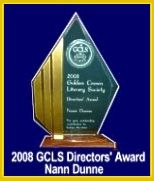
JAW's success has been due to the Staff and contributors noted above, who so generously shared their talents with our JAW readers. They helped make JAW a product to be proud of - and in case you newer readers aren't aware of this, the 2008 Golden Crown Literary Society's Directors' Award, which was presented to me, reads, "For Your Outstanding Contribution to Lesbian Literature." JAW epitomized that contribution; without JAW, without the Staff's help, I could never have claimed the award.

This listing of past accomplishments prefaces what to me is a sad, but necessary, decision. This, the December 2011 issue of JAW, will be its final appearance.

I've been giving that decision a lot of thought over the past year and especially over this summer. A number of blogs are being produced that could take up the banner of giving pointers to authors and promoting lesbian literature that have been JAW's mission for many years. None of those blogs were available until recently, and JAW served a much-needed purpose. But we're not alone anymore, and putting JAW to rest won't be as much of a loss as it would have been a year or two ago. If anyone wants to start something similar, that's their option, and I wish them much success.

I do this with a heavy heart. I've loved producing JAW; I've loved having you all as contributors and readers; and I've loved giving free promotion to so many of our lesbian writers and publishers. But frankly, I'm tired. I've fought through some serious health problems for the past three years, and although my health has greatly improved, my energy and stamina are nowhere near what they used to be. In the past, I could write, produce JAW, edit, read, and still have a life, but that's not the case anymore and something has to give.

I'll still be around. I have some stories within me waiting to be written, and I'm champing at the bit to get going with them. Maybe I can pop onto the GCLS list, FaceBook, and the LesFic_Unbound list a little more often and say hi to everyone. Whatever, I'm just as close - and a lot quicker to reach - by email.

I'm toying with the idea of turning JAW into my personal blog on writing, but that remains to be decided. In the meantime, if you have anything linked to the JAW archives, that should be good up until August 2012, and maybe longer if I decide to go the blog route.

It's been a fun ride, and thanks predominantly to JAW's renowned and outstanding Staff, it's been a proud and honorable one. Please accept my deepest and sincere gratitude.

Love and hugs to each of you,
Nann Dunne


THE EIGHTH ANNUAL
GOLDEN CROWN LITERARY CONFERENCE
JUNE 13-17, 2012
MINNEAPOLIS, MINNESOTA

Mark your calendars now to prepare for the upcoming Golden Crown Literary Society (GCLS) Conference.

Jewelle Gomez        Lambda Award winning author Jewelle Gomez will be the keynote speaker for the 2012 Eighth Annual GCLS Literary Conference. Gomez is a writer and activist who is also the recipient of a literature fellowship from the National Endowment for the Arts, two California Arts Council fellowships and an Individual Artist Commission from the San Francisco Arts Commission.

She is the author of the award-winning novel, The Gilda Stories, which has been in print since its publication in 1991 and is taught
in classrooms across the country. Her fiction, poetry and essays have appeared in numerous periodicals, among them: The San Francisco Chronicle, The New York Times, The Village Voice; Ms Magazine, ESSENCE Magazine, The Advocate, and Black Scholar. Anthologies have included Home Girls, Reading Black, Reading Feminist, Swords of the Rainbow, The Best Lesbian Erotica of 1997 and Dark Matter. Her other publications include three collections of poetry -- The Lipstick Papers, Flamingoes and Bears and Oral Tradition. She is also the author of a book of essays called Forty-Three Septembers and a collection of short fiction, Don't Explain.

Gomez was born and raised in Boston. Her background is Native American, African American and Cape Verdean and her writing has always meaningfully explored ethnicity, class, gender and sexuality.

This year's conference will offer author panels, seminars/workshops for readers and writers and social events such as pool parties, karaoke night and special activities for new attendees. The final night of the event will be the presentation of the Goldies, the annual Golden Crown Literary Awards. Since the first Goldies were awarded in 2005, the categories have expanded from three to twelve. This year, more than three dozen book awards will be given, along with the Trailblazer Award, the Directors' Award and the Ann Bannon Popular Choice Award.

The Golden Crown Literary Conference is the best opportunity for readers, authors, editors, publishers, aspiring writers, and media to learn about and meet colleagues as they explore lesbian literature. Membership in the GCLS is not required to attend.

For more about the conference, as well as a tentative schedule, please visit the GCLS website at www.goldencrown.org

The Mission of the Golden Crown Literary Society

The Golden Crown Literary Society (GCLS) is a literary and educational organization for the enjoyment, discussion, and enhancement of lesbian literature. Our goals are to support and strengthen quality lesbian literature by providing places for readers and writers to interact, to encourage and assist new writers and established authors, and to recognize and promote lesbian work


Call For Submissions

Freya Publications

SUNKISSED
Short love stories or erotica with a summer theme. No more than 3000 words. Clean manuscripts, double spaced only. Closing date: January 31 2012. Email submissions only please.

SHE BITES
A collection of lesbian/bi short stories with a gothic horror theme. No more than 3000 words. Closing date: March 2012. Email submissions only please.

NOVELS

Good quality, original fiction of any genre. We are particularly looking for interesting plots, with strong, engaging characters. All submissions should have a clear lesbian/bi identity. Manuscripts should not exceed 90000 words. Please send first three chapters and a breif synopsis. Email submissions only please.

Please email submissions to: charlie@freyapublications.com


Call For Submissions

Lesbian Short Fiction Competition

Kissed By Venus & Alexandra Wolfe present the
"New Voices" Lesbian Short Fiction Competition. We are looking for short stories written by and for lesbians of 4000 words or less, in any genre.

Cash prizes and publication in the February 2012 issue of the Venus Magazine.

SUBMISSIONS OPEN:
October 1st - December 21st 2011

FOR MORE INFO:
http://kissedbyvenus.ca/?page_id=3304

Back to Top         


Submissions to this newsletter are for promotional use only. Contributors retain their own copyrights and all rights to their submitted work. Requests to reprint should be directed to the individual contributor—email addresses are included in their signature boxes. I respectfully ask that the authors' credits state previous publication in JustAboutWrite.com. All other material on this site—unless specified otherwise—is copyright 2003-2011 to Nann Dunne. 

Disclaimer: All submitters are responsible for acquiring permissions to publish any copyrighted material in this newsletter. Nann Dunne and "Just About Write" will not be held responsible. If the material submitted is not accompanied by proof of the permissions, it will not be accepted.

Back to Top

Original Template Copyright © 2001 by http://www.123webmarketing.com.
Final Design Copyright © 2003-2011 by Nann Dunne. All rights reserved.


Article Collections
of Interest

Article Writing
Blogging-RSS
Book Marketing
Book Marketing 2
Copy Writing
Creative Writing
eBook Writing
Essay Writing
Home Business
Publishing
Copy Writing
Writing
Writing Tips


Lesbian Humor—
Click Image

Gay e-Magazine logo


Listen to internet radio with Myqmunity-book Talk on Blog Talk Radio


Quotation of
the Day
A FanFic Radio Site
Listen to internet radio with Allaine on Blog Talk Radio
Free clipart archive